Qatar E‑Invoicing: A Practical Business Guide
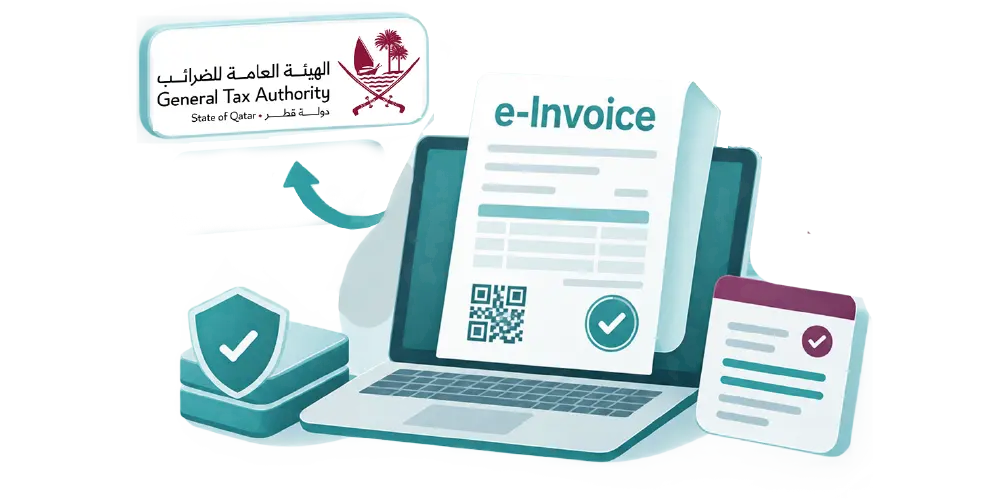
Businesses are increasingly moving away from manual paperwork toward digital systems that make financial operations easier to manage. But what does Qatar e-invoicing actually mean? Is sending an invoice as a PDF enough, and what role does the General Tax Authority (GTA) play in electronic invoicing?
E-invoicing, or electronic invoicing, involves creating, managing, and exchanging invoice information electronically in a structured format where required by the applicable system. Unlike simply emailing a PDF, an e-invoicing process may allow compatible systems to read, validate, and process invoice data automatically.
For businesses looking to organize their invoicing processes and explore integration options, Fatora supports integration with GTA and provides a dedicated path for businesses to learn about the connection process.
In this guide, we’ll explain how electronic invoicing works, the role of GTA, the difference between e-invoicing, VAT, and tax invoices, and how a ready-made platform such as Fatora can help businesses manage their invoicing operations.
What Is E-Invoicing?
Electronic invoicing, commonly known as e-invoicing, is the process of creating, issuing, managing, and exchanging invoices electronically. Depending on the applicable system, it may involve structured invoice data that can be processed by compatible software rather than relying exclusively on documents designed for people to read.
For example, when a company sells products or provides services, it needs to record information such as the seller’s details, customer information, product descriptions, quantities, prices, and transaction totals. Tax-related information may also be required, depending on the transaction and applicable rules.
An electronic invoicing system helps organize this information digitally. Where structured formats and system integration are required, invoice data can also be exchanged between compatible systems according to the relevant specifications.
Is an Electronic Invoice the Same as a PDF?
Not necessarily. A PDF is a document format, while e-invoicing refers to a process that may involve structured data, specific technical formats, and electronic exchange between systems.
Consider the following differences:
- PDF invoice: A document that displays invoice details and can be shared through email or another digital channel.
- Structured electronic invoice: Invoice information organized in a format that compatible systems can read and process.
- Integrated e-invoicing: A process that may involve exchanging invoice data with other systems according to defined technical and regulatory requirements.
A PDF can be part of a digital invoicing workflow, but emailing a PDF alone does not establish that an invoice meets the requirements of a particular e-invoicing framework.
Why Is Electronic Invoicing Important for Businesses?
As businesses grow, managing invoices manually can become time-consuming. Customer details may be entered repeatedly, documents may be stored in different locations, and reviewing transactions can require additional administrative work.
Electronic invoicing can help businesses:
- Organize invoice records in a digital environment.
- Reduce repetitive manual data entry.
- Improve access to customer and transaction information.
- Make invoice review and record retrieval easier.
- Support data exchange between compatible systems.
- Create more consistent invoicing processes across teams.
The benefits depend on the features of the system, the quality of the data, and how the business implements its invoicing workflow.
For companies researching electronic invoicing in Qatar, the first step is to understand their operational needs and verify which regulatory and technical requirements apply to their activities.
What Is the Role of GTA in Qatar E-Invoicing?
The General Tax Authority (GTA) is Qatar’s authority responsible for administering tax matters within its remit and overseeing relevant tax regulations.
When businesses research GTA e-invoicing, they should distinguish between the authority’s regulatory role and the role of invoicing software.
The relevant authority establishes or administers applicable regulatory requirements, while invoicing platforms help businesses organize invoice information and may provide integration capabilities where supported and required.
Before implementing an electronic invoicing solution, businesses should establish:
- Which official requirements apply to their activities.
- Whether a particular invoicing format or data structure is required.
- Whether integration with a designated system is necessary.
- What information must be included in invoices.
- Which technical specifications and procedures apply.
- How invoices and related records should be managed.
These questions matter because regulatory requirements can differ depending on the business, transaction type, and applicable framework.
Businesses should also verify official announcements concerning implementation dates, mandatory participation, technical specifications, and compliance obligations. They should not assume that every business is subject to identical requirements or that using any invoicing platform automatically guarantees compliance.
For additional information, visit the GTA and Tax Guide for Qatar.
If you want to explore Fatora’s available integration path, visit the Fatora GTA Integration page.
E-Invoicing vs. VAT vs. Tax Invoice: What’s the Difference?
These terms are related to business transactions and financial records, but they describe different concepts. Understanding the distinction helps business owners identify what their invoicing process needs to support.
|
Term |
What it means |
What businesses need to consider |
|
E-Invoicing |
The electronic creation, processing, and exchange of invoice information |
Suitable software, organized data, and applicable technical requirements |
|
VAT |
Value Added Tax, a consumption tax applied under the relevant tax framework |
The business’s tax position and any applicable tax obligations |
|
Tax Invoice |
An invoice containing the tax information required for a particular transaction |
Applicable invoice fields, transaction details, and relevant tax rules |
E-Invoicing
E-invoicing focuses on how invoice information is created, structured, processed, and exchanged electronically. Depending on the framework, it may involve specific data formats and connections between systems.
VAT
Value Added Tax (VAT) is a tax concept, not an invoicing method. Whether a business must charge, report, or account for VAT depends on the applicable tax legislation and the business’s circumstances.
Businesses operating in Qatar should verify the current local tax position with official sources rather than assuming that VAT rules used in other countries automatically apply in Qatar.
For more information, read the Qatar VAT Guide.
Tax Invoice
A tax invoice is a document used to record a transaction and provide the tax information required under the applicable rules.
A tax invoice may be issued electronically if it meets the relevant requirements. However, not every electronic invoice is necessarily a tax invoice, and not every PDF invoice automatically satisfies the requirements of an electronic invoicing framework.
For practical guidance on invoice details and creation, see our Qatar Tax Invoice Guide.
How Does Fatora’s GTA Integration Work?
When exploring an invoicing platform, businesses need to understand how invoice creation, data management, and integration fit together.
Fatora supports integration with GTA and provides a dedicated page where businesses can explore the available integration path. The general process can be understood in three stages: preparing business information, reviewing and activating the integration, and managing invoices through the available system features.
Step 1: Prepare Your Business Information
Before exploring integration, review the information your business uses when creating invoices.
This may include seller details, customer records, product and service descriptions, quantities, prices, and any other information required for your transactions.
Accurate and well-organized data makes it easier to review your invoicing workflow and identify any information that needs attention before proceeding.
Step 2: Review the Integration Requirements
Next, review the available integration information and determine what is required for your business.
The necessary setup may depend on the integration specifications, your account configuration, and the applicable requirements. For this reason, businesses should follow the current instructions provided through Fatora’s integration resources rather than relying on assumptions about technical steps.
You can start by visiting the GTA Integration page.
Step 3: Activate the Integration and Manage Invoices
Once the applicable requirements have been reviewed, follow the available process for activating the integration, where appropriate.
You can then manage your invoicing workflow using the features available in your Fatora account. This may include organizing invoice information, reviewing transaction details, and maintaining records.
The exact functionality and data flow should be confirmed through current product documentation. Businesses should also verify any applicable requirements for issuing, transmitting, or retaining invoices.
A Simple View of the Integration Process
The relationship can be illustrated as:
Company → Fatora → GTA
- Company: Prepares transaction information and manages business records.
- Fatora: Provides invoicing tools and the available integration path.
- GTA: Represents the relevant tax authority within the applicable regulatory framework.
This is a simplified conceptual illustration, not a technical architecture diagram. The actual data flow, validation procedures, and integration specifications should be confirmed with the product team before publication.
Connect with GTA: Explore the Fatora GTA Integration page to review the available next steps.
Why Use a Ready-Made Platform Instead of Building an Integration Internally?
Some businesses consider developing their own invoicing software or building a custom integration. This can be appropriate for organizations with specialized technical requirements, but it also involves development, testing, maintenance, and ongoing management.
A ready-made invoicing platform can provide a more practical starting point for businesses that want to organize their invoicing operations without building every component themselves.
1. Save Time on Initial Setup
Building an internal solution requires defining requirements, developing functionality, testing workflows, and maintaining the system over time.
A ready-made platform gives businesses an existing invoicing environment to work with and a defined path for exploring available integration options.
The actual time required depends on the business’s needs, configuration, and integration requirements.
2. Manage Invoices and Business Data in One Place
When customer records, product details, and invoices are spread across multiple spreadsheets and applications, reviewing transactions can become difficult.
A centralized invoicing platform can help organize this information and make it easier for authorized users to find the records they need.
This can be particularly useful for growing businesses that handle more customers and transactions over time.
3. Reduce Repetitive Manual Work
Manually entering the same customer and product information into every invoice takes time and increases the chance of errors.
Where the platform supports reusable customer and product records, businesses can reduce repetitive entry and establish a more consistent invoicing workflow.
Automation should still be supported by appropriate checks to ensure that transaction information remains accurate.
4. Support Finance and Operations Teams
Finance teams need to review transaction records, while operations teams may need to manage customer information and day-to-day invoicing activities.
Using a centralized system can make these workflows easier to coordinate and reduce the need to move information between disconnected tools.
The value depends on the platform’s features and how the organization structures its internal processes.
5. Follow a Defined Integration Path
Building a custom connection may require specialized technical resources and ongoing maintenance.
A platform that already offers an integration path can give businesses a clearer starting point for understanding available capabilities and setup requirements.
However, using ready-made software does not automatically guarantee regulatory compliance. Businesses should confirm that the solution and its configuration meet the requirements applicable to their activities.
Frequently Asked Questions About Qatar E-Invoicing
What is Qatar e-invoicing?
Qatar e-invoicing refers to electronic invoicing in the context of businesses operating in Qatar. In general, e-invoicing involves creating, managing, and exchanging invoice information electronically, potentially using structured formats and integrated systems where required.
Businesses should consult official sources to confirm the specific framework and requirements that apply to them.
Is an electronic invoice the same as a PDF?
No, not necessarily. A PDF is a document format that people can read, while an electronic invoicing framework may require structured invoice data that compatible systems can process automatically.
Sending a PDF by email alone does not prove that the invoice meets the requirements of a particular e-invoicing framework.
What is the difference between e-invoicing and VAT?
E-invoicing concerns the electronic creation and handling of invoice information. VAT is a tax that applies under the relevant tax legislation.
They are related to business transactions but serve different purposes. Businesses should verify their tax obligations and invoicing requirements separately.
Does Fatora support GTA integration?
Yes, Fatora supports integration with GTA and provides a dedicated page for businesses to explore the available integration path.
Visit the Fatora GTA Integration page for further information about the process and next steps.
How can my business get started?
Start by reviewing your current invoicing process, organizing customer and product information, and identifying the requirements relevant to your business.
Then explore the integration information available through Fatora and confirm any account-specific setup requirements before proceeding.
Can I use my existing Fatora account?
Check the available integration instructions to determine whether your current account can be used and whether any additional configuration or requirements apply. The process may depend on your account setup and the features available to you.
Does using e-invoicing software automatically make my business compliant?
No. Compliance depends on the applicable rules, the accuracy of invoice information, the system’s capabilities, and how the business configures and uses it.
Businesses should verify the relevant regulatory requirements and confirm that their invoicing processes meet those requirements.
Get Started with GTA Integration Through Fatora
Electronic invoicing is about more than replacing paper documents with digital files. It can help businesses organize invoice information, improve record management, and support electronic data exchange between compatible systems.
For companies researching e-invoicing Qatar, the best starting point is to understand their business requirements, verify the relevant official guidance, and choose an invoicing solution that supports their operational needs.
Fatora provides invoicing tools and a dedicated path for exploring GTA integration. By reviewing the available information, businesses can better understand the process and determine the next steps for their invoicing workflow.
Connect with GTA:
Explore the available integration path through the Fatora GTA Integration page.
See GTA Integration Details:
For more context, visit the GTA and Tax Guide for Qatar, the Qatar VAT Guide, and the Qatar Tax Invoice Guide.
Before making decisions about tax treatment or regulatory compliance, always verify the latest applicable requirements with official sources.